Gran Canaria in 3 Days: a different way to experience the island
If you’re looking for a Gran Canaria 3 day itinerary, you’re probably trying to avoid the typical experience: crowded buses, rushed stops, and places that feel more like postcards than real life.
Because deep down, that’s not why you travel.
You travel to feel something different.
To understand a place, not just pass through it.
Gran Canaria is perfect for that—if you know how to approach it.
It’s not just beaches and resorts. It’s neighborhoods where life happens slowly, landscapes that change every hour, and people who shape the island in ways you won’t find on Google.
This itinerary is not about doing more.
It’s about experiencing better.
A different way to explore the island
Day 1 — Arriving, slowing down, and feeling the island
Most travel guides focus on what to see.
This one focuses on how to experience it.
Because the real shift in tourism today is not about destinations—it’s about intention.
More and more travelers are looking for something deeper:
- connection instead of consumption
- local impact instead of mass tourism
- experiences that feel real, not staged
That’s why we’ve selected a few key experiences that reflect this way of traveling.
Not because they’re “must-do activities”, but because they create a different relationship with the place:
- Surf & ocean experiences → connect you with nature in an active, respectful way
- Sunset kayak & night snorkeling → help you experience the island beyond the typical daytime tourism
- Scuba diving & paragliding → shift your perspective—literally
- Winery tours → connect you with local production, culture, and territory
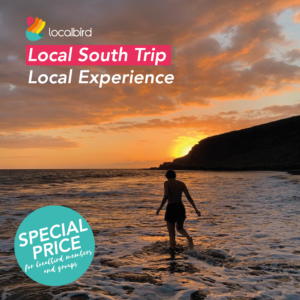
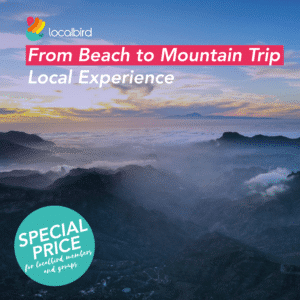
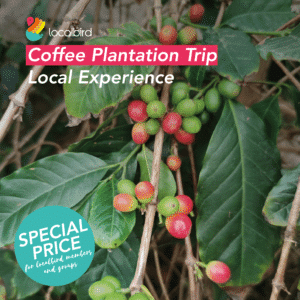
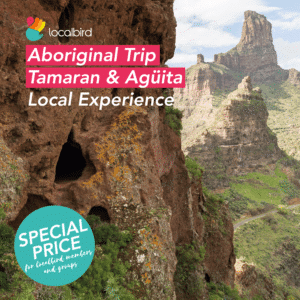
- Localbird trips → small group experiences designed to support local communities and avoid mass flows
Each of these is chosen with a purpose:
to reduce impact, support local economies, and create meaningful moments.
Your first day shouldn’t be about rushing.
It should be about arriving.
Start simple: a walk along Las Canteras beach. No plan, no pressure. Just the ocean, the city waking up, and time to land mentally.
From there, head into Vegueta, the old town.
Walk without direction.
You’ll pass small plazas, local cafés, everyday life happening around you. You can visit Casa de Colón if you feel like adding context—but it’s not mandatory.
What matters here is not what you see, but how you move: slowly, curiously.
Later, step away from the city and visit the Jardín Canario.
It’s free, quiet, and one of the best ways to understand the island’s natural identity without noise or crowds. Sit, walk, disconnect.
Before sunset, you can explore Triana—not as a shopping street, but as a social space. Observe, grab something local, watch how people interact.
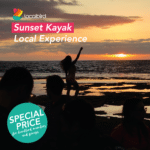
Then, if you want to elevate the day, move into a sunset kayak aperitif.
It’s not just an activity—it’s a transition into a different rhythm.
Day 2 — Going deeper: nature, perspective, and local life
Start the day by moving inland.
Drive or bus—it doesn’t matter. What matters is leaving the coastal bubble.
Gran Canaria’s interior is raw, quiet, and often overlooked.
Villages like Tejeda, viewpoints, or even just stopping along the road already give you a completely different perspective.
Take time here. No rush.
You can combine this with a short local hike or viewpoint stop—free, simple, and often more powerful than any “organized” plan.
Around midday, choose one meaningful experience.
A winery tour is a good example—not because it’s trendy, but because it connects you directly with local production, land, and people.
In the afternoon, shift your perspective again:
- Paragliding → seeing the island from above
- Scuba diving → discovering what exists below
Both are optional. Both are impactful.
And both move you away from passive tourism.
If you prefer something slower, you can also just return to the coast and explore a less crowded area, sit in a local bar, or walk through a non-touristic neighborhood.
In the evening, keep it open.
This is where real travel happens—unplanned moments, conversations, small discoveries.
Day 3 — Connection, community, and a different ending
Why this balance matters
Your last day is not about doing more.
It’s about choosing what stays with you.
Start with the ocean again—but this time actively.
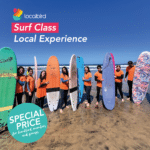
A surf class is not just sport—it’s part of the island’s lifestyle. It connects you with locals, with rhythm, with the environment.
Or keep it simple: beach, swim, slow morning.
Midday, instead of a typical excursion, this is where Localbird trips come in.
They’re designed differently:
- small groups
- local providers
- no overcrowded stops
- real interaction
They complement all those free experiences by adding human connection, not just places.
In the afternoon, give yourself space again.
Walk through a quiet area. Sit somewhere without a plan. Reflect.
You can even revisit a place from day one—because travel is not about constant novelty.
And for your last moment, you have two options:
- keep it simple → sunset, conversation, calm
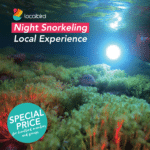
- or go for something unique → night snorkeling
The ocean at night is different.
More silent. More present.
A perfect way to close the experience.
This itinerary is not built around activities.
It’s built around rhythm:
- free exploration → to understand the place
- local spaces → to observe real life
- selected experiences → to deepen the connection
Because sustainable tourism is not just about what you do.
It’s about:
- how much you consume
- where your money goes
- and how you relate to the destination
Check out our local trip options below: